Hunger and Horror Personified: The Wendigo

Hunger and Horror Personified: The Wendigo

They say when the night’s too dark and the forest too quiet… that’s when the wendigo is near.

As far as monsters go, the wendigo is pretty terrifying. It stalks the frozen wilderness, a specter of hunger that can never be satisfied, with an appetite for human flesh.

Legends say that those who are desperate enough to engage in cannibalism when on the brink of starvation can transform into this beast. The wendigo myth emerges from Algonquian tribes across the northeastern woodlands of North America. The legends were cautionary tales in places with harsh winter climates where survival was hard and starvation was always a concern.

Since the Until Dawn movie came out recently, I wanted to look into wendigo lore. This is about all I can handle because horror and I don’t go together too well. The movie is guaranteed to be too scary for me. The video game looked interesting and I even watched some videos about it, but I was not brave enough to actually play… and I’m not much a PC gamer.
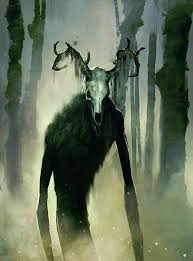
(Photo: Legends of Windemere)

Origins & Mythological Roots

The wendigo’s origins can be traced back to the Anishinaabe, Cree, Ojibwe, Innu, and other Algonquian-speaking tribes across Canada and the northern United States.

Early European settlers and fur traders documented these stories in the 19th century, often with a mixture of dismissal and fascination. But those who spent enough winters in the northern forests began to understand why the wendigo held such power in indigenous consciousness. When blizzards howl for weeks and food stores dwindle, the human mind can wander to dark places.

Unlike many monsters that simply prey on humans, the wendigo represents what humans can become when they surrender to their basest instincts.

Appearance and Characteristics
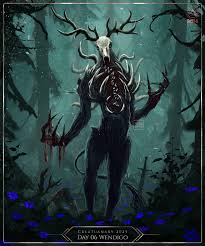
Photo: Rishi

Picture this: a gaunt, towering figure with ash-gray skin stretched tight over a skeletal frame. Eyes sunken deep into hollow sockets, yet burning with an insatiable hunger. Lips torn and bloody from feeding. Claws that can rend flesh from bone. In some descriptions, the wendigo’s heart is made of ice and literally frozen solid. The modern image of the wendigo often includes antlers or a deer skull for a head.

What’s particularly terrifying about the wendigo is that it grows with each victim it consumes, yet it never feels satisfied. Its hunger only increases proportionally to its size. Constantly hungry and never full despite feasting, this is the stuff monsters and metaphors are made of.

Wendigos may be accompanied by bone-chilling cold or a putrid stench like decaying flesh. Nature itself seems to recoil from the creature’s presence, birds fall silent, small animals flee, and even the wind seems to hold its breath.

Transformation and Powers

The transformation from human to wendigo typically follows one of two paths: either consuming human flesh during times of famine triggers a physical metamorphosis, or a wendigo spirit possesses a vulnerable person, usually someone weakened by greed, despair, or isolation.

In traditional lore, the wendigo embodies winter’s cruelty. It can manipulate temperature, bringing killing frosts or blizzards. Wendigos are smart predators, luring victims away from safety by mimicking the voice of a loved one calling for help in the darkness. Some stories grant it supernatural speed, allowing it to stalk prey for days without tiring.

Protections and Weaknesses

Traditional protections against wendigos were primarily preventative. Don’t travel alone during the deadliest part of winter. Don’t speak the creature’s name unnecessarily. Maintain strong community bonds that prevent the isolation where wendigo possession takes root.

Some later stories mention fire or silver as wendigo weaknesses, possibly influenced by European werewolf lore. Indigenous traditions emphasized spiritual remedies administered by healers or medicine people for those showing early signs of wendigo transformation.

Media Appearances

Supernatural featured the creature in its first season, emphasizing its voice mimicry and twisted appearance. The TV show Hannibal made subtle nods to wendigo lore throughout its run, with the titular character’s murderous cannibalism visualized through wendigo imagery. (Sidenote: I really wanted to watch Hannibal because I loved Bryan Fuller shows and tried to watch, but the cannibalism squicked me out too badly. I gave it another shot due to all the queerness but still couldn’t do it. Maybe one day.)

Gaming has perhaps embraced the wendigo most enthusiastically. In addition to 2015’s Until Dawn, Fallout 76 incorporates them into its post-apocalyptic landscape. The creature appears in everything from The Dark Pictures Anthology to various Marvel games.
Historical Sightings & Scientific Explanations

One of the most documented wendigo-related incidents involved Swift Runner, a Cree man who killed and ate his family during the winter of 1879. He claimed to be possessed by a wendigo spirit, and while authorities attributed his actions to starvation-induced madness, his community recognized the pattern of wendigo possession.

Skeptics point to severe nutritional deficiencies, isolation-induced psychosis, and protein poisoning (sometimes called “rabbit starvation”) as potential scientific explanations for historical wendigo cases. When the body consumes its own fat reserves during starvation, the resulting ketosis can cause hallucinations and irrational behavior.

Oral traditions contain numerous accounts of humans transforming into wendigos, as well as stories of brave individuals hunting these creatures. The “First Dog” legend describes how dogs came to be human companions after helping to defeat a wendigo. Not surprising. Dogs are the best.

Quotes and Literary Excerpts

The wendigo’s journey from indigenous oral tradition to pop culture staple began in earnest with Algernon Blackwood’s 1910 short story “The Wendigo.” Blackwood captured the psychological dread perfectly with lines like “An old Wendigo broke through… slender as a sapling, yet gaunt as famine.”

Beyond Blackwood’s famous description, wendigo lore has inspired powerful language across literature. A Cree legend describes the wendigo’s endless hunger: “It grows with each life it eats—but still, it starves.”

Stephen King, in “Pet Sematary,” writes: “The Wendigo, that creature that comes to you in the pitiless winter…that makes you eat your own flesh and grow huge…and still be hungry.”

These quotes capture what makes the wendigo uniquely terrifying: it’s hunger personified and it’s not just a monster that eats you; it’s a monster you become.

Final Thoughts

The wendigo is a chilling reminder that under extreme circumstances the line between humanity and monstrosity can blur. It speaks to our deepest fears about hunger, isolation, and desperation. The most frightening monsters aren’t those that simply hunt us, they’re the ones we might become.

Sources

Britannica: https://www.britannica.com/topic/wendigo

Wide Open Spaces: https://www.wideopenspaces.com/wendigo/

Whispers of the Unknown: https://crypticfolklore.blogspot.com/2024/05/wendigo-mythology-origin.html?

Mythology Worldwide: https://mythologyworldwide.com/beyond-the-cannibalistic-monster-exploring-the-wendigos-deeper-meanings/

EBSCO Research Starter: http://www.ebsco.com/research-starters/religion-and-philosophy/wendigo-folklore?
Nymphs in Greek Mythology: Nature’s Divine Spirits

Nymphs in Greek Mythology: Nature’s Divine Spirits

Not every Greek myth has stood the test of time and is remembered in the modern age, but one minor deity remains familiar today, the nymph. As alluring beauties with a connection to the natural world we see every day, it’s no wonder these supernatural sprites enchanted us mortals.

Nymphs are certainly more recognizable than some of their male counterparts (the male version of a water nymph is a potamoi. Who has ever heard of a potamoi before? Answer: nobody.) However, you may not know too much about the nymphs unless you’re a mythology buff.

I learned more about the nymphs when creating my own version of water nymphs for my magical M/M romance Where There’s Smoke. (My main character was a male nymph, which may have scandalized the ancient Greeks.)

Let’s learn more about these captivating creatures from Greek mythology.

What Are Nymphs?

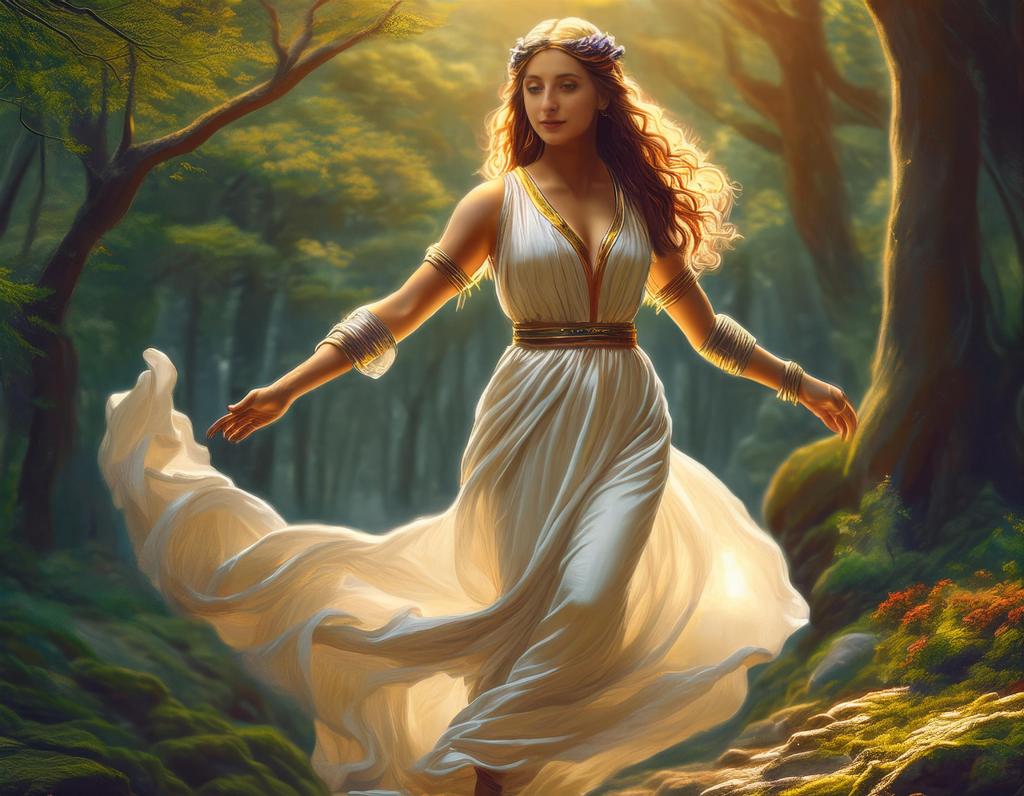
These divine beings weren’t quite gods but definitely more than mere mortals. Nymphs were beautiful female nature spirits who embody the essence of the natural world, from rivers and forests to mountains and seas, and their existence is deeply intertwined with the environment they inhabit.

Basically, they were part personification and part guardian of the natural resource they represented.

Unlike the Olympian gods, nymphs were typically tied to specific locations or natural features. They weren’t immortal in the same way as the gods, but they lived incredibly long lives and remained forever young.

As described in Homer’s works, they were often portrayed as young, beautiful maidens who danced, sang, and wove alongside streams or in sacred groves. In ancient Greek art, nymphs were often depicted as beautiful young women carrying water jugs or dancing in groups.

Types of Nymphs:

Naiads: The Fresh Water Princesses

These water nymphs ruled over springs, rivers, and fountains. Famous naiad Arethusa’s story is particularly dramatic – she was transformed into a spring to escape the river god Alpheus’s unwanted advances. Talk about extreme measures to avoid a bad date! Naiads were known for their healing powers and were often associated with sacred springs that were believed to cure illnesses.

Dryads: The Tree Huggers

Dryads shared a unique bond with trees – their lives were literally intertwined with specific trees. These nymphs were considered the guardians of forests and groves, protecting their trees with fierce dedication.

The most famous dryad story is probably that of Daphne, who transformed into a laurel tree to escape Apollo’s pursuit. This isn’t just a nymph thing. Women turning into things to escape mythological men—or as a punishment for dalliances with mythological men—is a pretty standard occurrence. This leads me to believe life could be pretty rough for the more attractive Greek ladies.

Oreads: Mountain Mavens

Mountain nymphs or Oreads loved hanging out in rocky crags and mountain valleys. Echo, perhaps the most famous Oread, was a chatty mountain nymph who got on Hera’s bad side and became just a voice. Hera cursed her to only repeat others’ words after Echo helped Zeus hide his affairs. Her tragic love story with Narcissus is one of mythology’s most famous tales of unrequited love.

Oceanids and Nereids: Sea Sirens

These marine nymphs were daughters of Oceanus and Tethys (Oceanids) or Nereus and Doris (Nereids). Thetis was among the strongest of the nymphs as some sources assert that she led the Nerids, and she had to wed a mortal man because the gods feared how powerful her son would be otherwise.

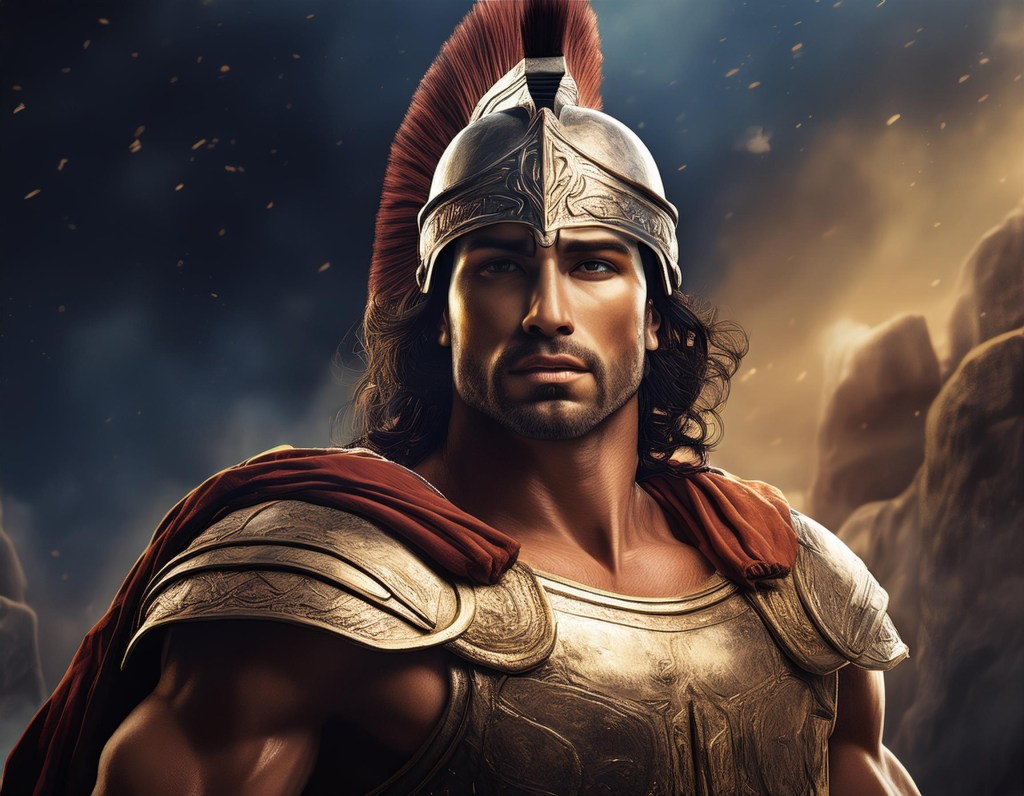
That son of hers is another Greek figure still known to modern audiences, Achilles. And yes, I did have to use a picture of Achilles. Usually, I don’t focus on women on my blog too often, but my hands are kinda tied here in talking about nymphs since according to the Greeks there aren’t male nymphs. But I still write gay romance, something Achilles himself was known to indulge in, so yeah, the rules of life require him to get a special mention and picture.

Powers and Abilities

Nymphs weren’t just pretty faces hanging out in nature. Okay, they kind of were, but they do have some nifty supernatural skills like:

  • Healing abilities (especially water nymphs)
  • Control over natural elements
  • The power to grant prophecies
  • Shape-shifting abilities
  • Extended lifespans
  • Some could even bestow curses when angered

The last one is more of a rarity. Nymphs were usually mild-mannered and playful, but they could be inspired to engage in a little divine fury on occasion, usually when someone threatened or harmed the natural land or landmark they protected.

Nymphs in the Pantheon of Greek Mythology: A Step Below the Olympians

While they are celebrated as divine entities, they operate on a different level compared to the Olympian gods and goddesses, such as Zeus, Hera, and Poseidon. Nymphs are typically regarded as lesser deities or spirits, existing in the realm between mortals and the Olympian gods.

While nymphs are revered and often worshiped in local cults, they lack the omnipotence associated with the Olympians. Since nymphs and their powers are limited to their natural settings, this gives them roles as guardians rather than rulers. They wield power more localized in scope. For instance, a naiad governs the stream she resides in, while a dryad protects a specific grove of trees.

Answering to Greater Powers

Nymphs often act as attendants or companions to the greater gods, reflecting their subordinate status in the mythological hierarchy. For example, many tales feature nymphs serving as attendants to Artemis, the goddess of the hunt and wild nature. They accompany her in the woods and are typically portrayed as loyal followers of this formidable goddess.

Ritual and Belief

Nymphs weren’t just characters in stories – they were deeply woven into ancient Greek culture. Ancient Greeks took their nymph worship seriously.

People would leave offerings at springs and groves believed to be home to nymphs. Sometimes they built shrines called nymphaea near springs and grottos, where they’d leave offerings like honey, oil, and milk. Some of these sacred spots became major cultural centers, showing just how important nymphs were to daily Greek life.

Why Nymphs Matter Today

In a world where we’re increasingly disconnected from nature, these ancient nature spirits remind us of humanity’s deep connection to the natural world. Their stories speak to eternal themes: love, transformation, and our relationship with the environment around us.

Whether you’re a mythology enthusiast, a fantasy reader, or just someone who appreciates a good story, nymphs offer something fascinating to explore. Their tales continue to inspire writers, artists, and storytellers today, proving that these ancient nature spirits still have plenty to teach us about our relationship with the natural world.


Sources:

  1. Larson, Jennifer. “Greek Nymphs: Myth, Cult, Lore” (Oxford University Press, 2001)
  2. Hard, Robin. “Handbook of Greek Mythology” (Routledge, 2004)
  3. Burkert, Walter. “Greek Religion” (Harvard University Press, 1985)
  4. Homer. “The Odyssey”
  5. Ovid. “Metamorphoses”
  6. Kerenyi, Karl. “The Gods of the Greeks” (Thames & Hudson, 1951)