Getting Stoned: Legendary Tales of Petrification

Getting Stoned: Legendary Tales of Petrification

Turning a living being into stone often symbolizes divine wrath or poetic justice. From ancient Greece to the Bible and into the realm of fairy tales, these stories tap into deep fears of paralysis and loss of agency. They also serve as cautionary tales about various moral failings.

The tales I found don’t really share the same vibes as my paranormal romance novel Sun and Stone, but I became curious about classic petrification stories since one character seeks magical mastery over rock and stone. My M/M romances are strictly HEA territory and being turned to stone is pretty much always a bummer.

However, all hope isn’t lost when it comes to petrification. Even stone can crumble under the redemptive power of love or heroism.

(P.S. Should I apologize for the title? I couldn’t resist. I’m not made of stone.)

Medusa’s Stony Glare
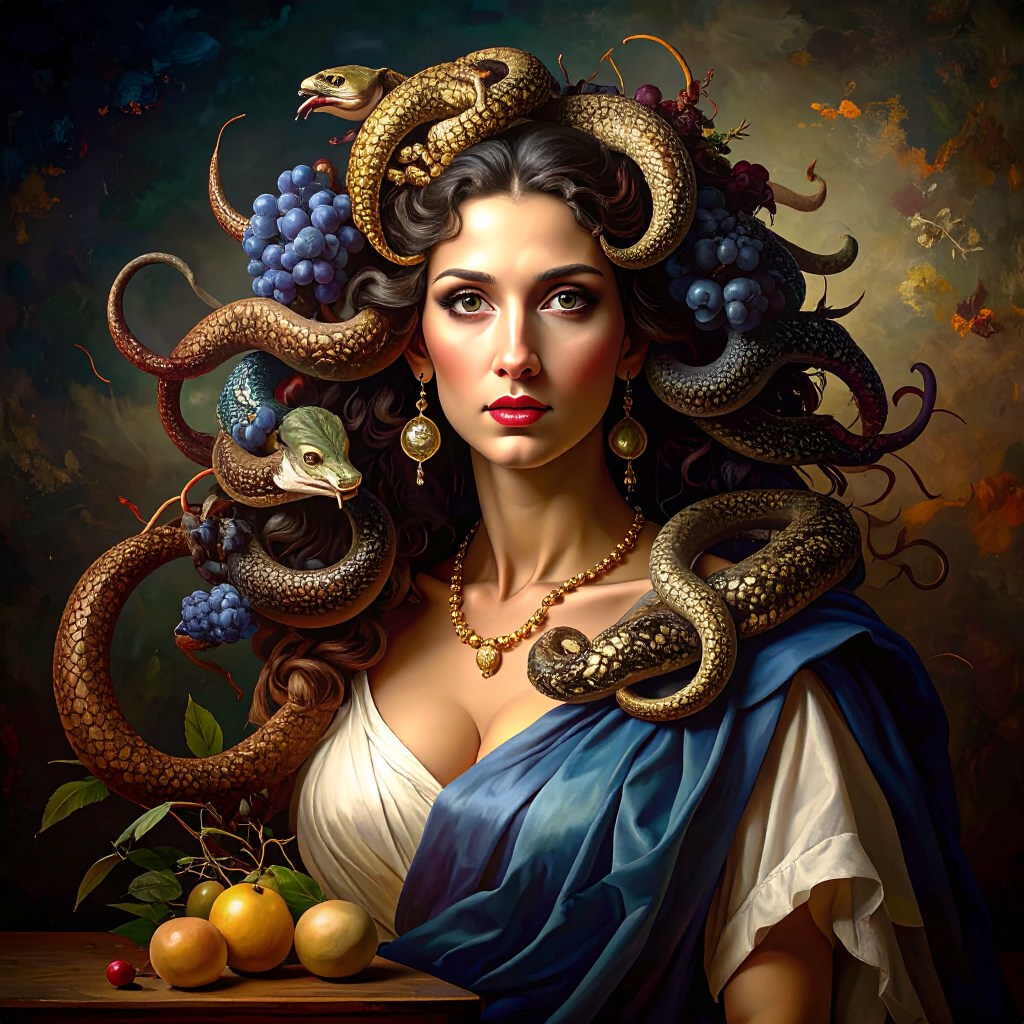
The story of Medusa remains one of the most enduring petrification myths. Born as one of three daughters of the sea deities Phorcys and Cetosisters, known as the Gorgons, Medusa stands apart as the only mortal among them.

Before her transformation, Medusa was renowned for her beauty, especially her flowing hair. As a priestess in Athena’s temple, she had devoted her life to the goddess of wisdom. However, her beauty attracted Poseidon, who assaulted her within the sacred temple. Rather than punishing the god, Athena directed her wrath at Medusa, transforming her into a monster whose gaze could turn any living being to stone.

Her transformation gave her the ultimate defense mechanism against further assault, but at the terrible cost of isolation and monstrosity.

The petrifying power of Medusa’s gaze became legendary. Anyone looking directly into her eyes would instantly transform into stone, creating a macabre gallery of statues around her dwelling.

Sent to slay her, Perseus avoided direct eye contact by using his polished bronze shield as a mirror to see Medusa’s reflection while he beheaded her. This power continued even after her death when Perseus used her severed head as a weapon against his enemies.

Modern interpretations have reclaimed Medusa’s narrative, viewing her less as a villain and more as a victim of both divine assault and injustice. Contemporary feminist readings celebrate her as a symbol of female rage and survival, turning the male gaze literally deadly… this is an interpretation I can get behind. I also love the Monster Prom franchise’s version of a gorgon, ruthless businesswoman Vera Oberlin.

Niobe’s Eternal Grief
The story of Niobe offers a different perspective on petrification, one born from overwhelming sorrow rather than divine punishment. Queen Niobe of Thebes made the fatal mistake of boasting about her fourteen children, claiming she was more blessed than the goddess Leto, who had only two offspring: Apollo and Artemis.

Mocking a god is a recipe for disaster.

Offended by such hubris, Leto sent her divine children to exact revenge. Apollo slew Niobe’s seven sons with his arrows, while Artemis dispatched her seven daughters. In a single day, Niobe’s pride turned to unimaginable grief. For nine days, the bodies of her children lay unburied, as Zeus had turned all witnesses to stone. Finally, the gods themselves buried the children.

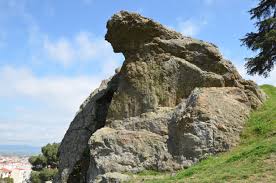
Consumed by sorrow, Niobe fled to Mount Sipylus in her homeland. There, her grief literally transformed her and she became a weeping rock formation that eternally seeps water, resembling tears streaming down a face. Travelers to modern Turkey can still visit what’s believed to be this natural formation, where water continuously trickles regardless of weather conditions.

Lot’s Wife and the Cost of a Backward Glance
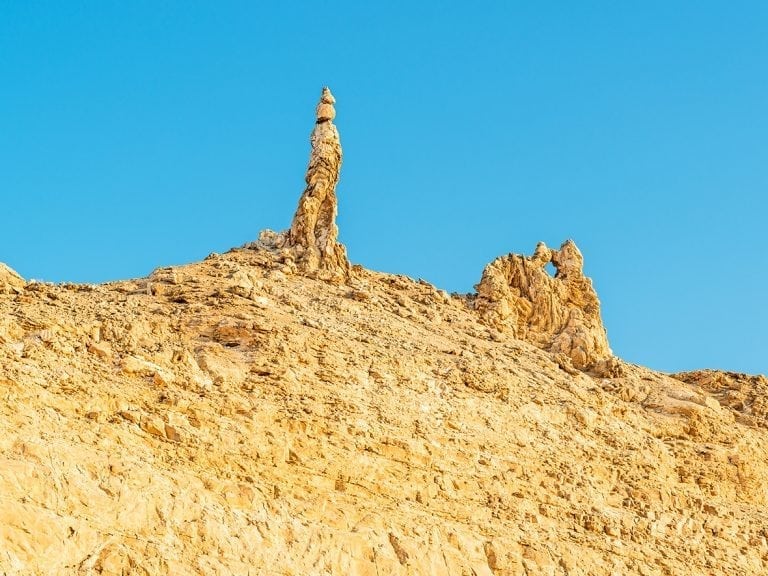
A famous biblical instance of petrification involves Lot’s wife during the destruction of Sodom and Gomorrah. As divine judgment rained fire and brimstone upon the wicked cities, Lot and his family were granted escape on one condition: they must not look back at the destruction.

While Lot and his daughters obeyed, his wife—whose name is never mentioned in Genesis—couldn’t resist a backward glance. Immediately, she transformed into a pillar of salt, becoming a cautionary monument to disobedience and attachment to sinful places. Visitors to the Dead Sea region today can see salt formations that local traditions identify as “Lot’s Wife.” These natural pillars are created through geological processes, not divine wrath.

This looking taboo appears across world mythologies: Orpheus loses Eurydice by looking back while leading her from the underworld; in Japanese folklore, Izanagi loses his wife Izanami the same way. This seems harsh to me. Have the gods never been homesick?

Atlas: A Mountain Born from Inhospitality
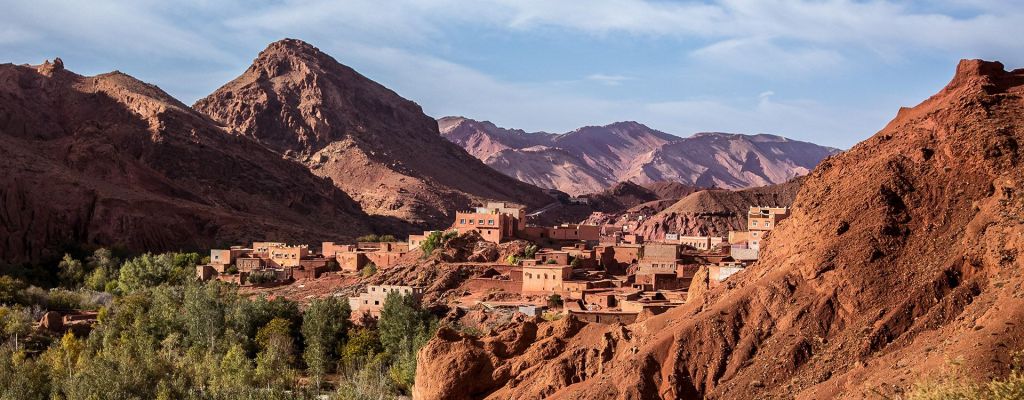
When Perseus was returning from his quest to slay Medusa, he sought rest in the kingdom of Atlas, a Titan who had been condemned to hold the heavens on his shoulders. Atlas, however, had received a prophecy that a son of Zeus would steal the golden apples from his garden, and so he refused Perseus hospitality—a serious breach of ancient custom.

Perseus revealed Medusa’s head, instantly transforming the Titan into a massive mountain range. What was once Atlas’s head became the peak, his shoulders the ridges, and his body the vast expanse that now bears his name, the Atlas Mountains of North Africa.

This transformation serves as both punishment and mercy. While Atlas lost his human form, he was also relieved of his eternal burden of holding up the sky. Some versions of the myth present a kinder interpretation, where Atlas, exhausted from his punishment, actually requests to be turned to stone as a release from his suffering.

Other Myths and Fairy Tales

The Brothers Grimm collected several tales featuring petrification, including “The Two Brothers,” where a wicked witch turns one brother and his animal companions to stone until the other brother defeats her and restores them. It’s always wicked witches, isn’t it? Lovers are also frequently turned to stone in fairy tales, often as punishment for forbidden romance or as the result of magical curses. Fortunately, classic fairy tale logical means that reversal is often possible through true love or acts of incredible courage.

Korean mythology features Grandmother Mago, who created mountains and islands from her body. In Chinese folklore, the legend of Nuwa depicts how this goddess repaired the pillar of heaven using stones that became living beings. Is there a term for making stone human? Personification? No, that’s not it.

In Cornwall, England, the “Merry Maidens” stone circle is said to be a group of girls petrified for dancing on the Sabbath. Similar explanations exist for the “Old Man of the Mountain” in New Hampshire (before its collapse in 2003) to the “Stone Wedding” formation in Bulgaria, allegedly a wedding party frozen in time.

Even Rocky Roads Can Have Happy Endings

These ancient stories of stone transformations often explain natural landmarks in the world. They also reveal universal human anxieties about powerlessness, paralysis, and loss of agency.

In paranormal romance, things work a bit differently. The right person can breathe life back into stone. Brooding love interests with stony exteriors and walls around their heart can come alive when met with true love.

Sources

“Medusa,” Wikipedia

“Niobe,” Britannica.com

“Lot’s wife,” Wikipedia

“The Myth of Atlas and Perseus,” Theoi.com.

“Petrifaction in Mythology and Fiction,” Wikipedia

Midas Touch: The Mythology That Inspired My Fantasy Novel

Midas Touch: The Mythology That Inspired My Fantasy Novel

Where does inspiration come from? 

And what inspires me to write? For some reason, I feel like I should have a cool answer to questions like these. Just like every superhero needs an epic origin story, maybe novels deserve the same. 

The truthful answer is I just think about things. Then I think about more things. 

All those things become a giant list of maybes until eventually the things I’m tossing around in my head stop being ideas and I actually get attached to them and then have to turn them into a story. It’s not a glamorous process.

My contemporary fantasy novel Strikes Twice is one of the rare exceptions where I actually had a clear starting concept.

Have you heard about the Midas touch or the Greek myth about King Midas? He wished that everything he touched turned to gold. Naturally, this went terribly. For example, food and people are two things that don’t do well as gold.

This was the inspiration for the novel. Except instead of turning things to gold, anyone the cursed character touches gets a zap. Sometimes a big zap.

But it turns out that King Midas has two Greek myths associated with him, which have almost nothing to do with each other. I had absolutely no idea about this until recently. It’s actually an amusing and very weird story.

More to Midas

In the other story, Pan the nymph with wooden pipes and the god Apollo competed to see who was the better musician because apparently the gods had nothing better to do. Most people liked Apollo’s lyre playing best, because in addition to his archery skills, he was also the god of music.

But Midas picked Pan as the winner, and Apollo concluded he must have an ass’s ears (burn?) and so Midas’s ears transformed into a donkey’s ears.

As if this myth weren’t strange enough, Midas wore headgear to cover his ears and swore his barber to secrecy. The barber needed to spill the tea, so he dug a hole near a river and whispered the secret. The reeds that grew by the river then started whispering the secret and telling everyone that Midas had donkey ears.

From gold to donkey ears. The moral of both stories is a warning about what happens when mortals get involved with the gods. Another acceptable moral is that Greek myths are weird.

Shocking Curses

So the starting concept for Strikes Twice was a cursed man shocks everything he touches. Kind of like the Midas Touch where everything Midas touched turned to gold.

That’s the basic premise, but I write romance novels, so it also needed a romance aspect and it turns into something like this:

If a dangerous electrical curse were attached to man you found nearly impossibly to resist, how long would you remember to keep your hands to yourself?

Unlike Midas’s other myth, everyone in Strikes Twice keeps their regular ears. The main character Marty has enough trouble trying to lift Az’s curse without getting zapped as their growing attraction makes distance difficult. 

Strikes Twice features enemies to lovers, an understandably grumpy shifter, an optimistic wizard, action, steamy scenes, cruel curses, and love triumphing against all odds. This the second novel in the Elementally Yours Series, and each book features different characters and can be read as a standalone.


Nymphs in Greek Mythology: Nature’s Divine Spirits

Nymphs in Greek Mythology: Nature’s Divine Spirits

Not every Greek myth has stood the test of time and is remembered in the modern age, but one minor deity remains familiar today, the nymph. As alluring beauties with a connection to the natural world we see every day, it’s no wonder these supernatural sprites enchanted us mortals.

Nymphs are certainly more recognizable than some of their male counterparts (the male version of a water nymph is a potamoi. Who has ever heard of a potamoi before? Answer: nobody.) However, you may not know too much about the nymphs unless you’re a mythology buff.

I learned more about the nymphs when creating my own version of water nymphs for my magical M/M romance Where There’s Smoke. (My main character was a male nymph, which may have scandalized the ancient Greeks.)

Let’s learn more about these captivating creatures from Greek mythology.

What Are Nymphs?

These divine beings weren’t quite gods but definitely more than mere mortals. Nymphs were beautiful female nature spirits who embody the essence of the natural world, from rivers and forests to mountains and seas, and their existence is deeply intertwined with the environment they inhabit.

Basically, they were part personification and part guardian of the natural resource they represented.

Unlike the Olympian gods, nymphs were typically tied to specific locations or natural features. They weren’t immortal in the same way as the gods, but they lived incredibly long lives and remained forever young.

As described in Homer’s works, they were often portrayed as young, beautiful maidens who danced, sang, and wove alongside streams or in sacred groves. In ancient Greek art, nymphs were often depicted as beautiful young women carrying water jugs or dancing in groups.

Types of Nymphs:

Naiads: The Fresh Water Princesses

These water nymphs ruled over springs, rivers, and fountains. Famous naiad Arethusa’s story is particularly dramatic – she was transformed into a spring to escape the river god Alpheus’s unwanted advances. Talk about extreme measures to avoid a bad date! Naiads were known for their healing powers and were often associated with sacred springs that were believed to cure illnesses.

Dryads: The Tree Huggers

Dryads shared a unique bond with trees – their lives were literally intertwined with specific trees. These nymphs were considered the guardians of forests and groves, protecting their trees with fierce dedication.

The most famous dryad story is probably that of Daphne, who transformed into a laurel tree to escape Apollo’s pursuit. This isn’t just a nymph thing. Women turning into things to escape mythological men—or as a punishment for dalliances with mythological men—is a pretty standard occurrence. This leads me to believe life could be pretty rough for the more attractive Greek ladies.

Oreads: Mountain Mavens

Mountain nymphs or Oreads loved hanging out in rocky crags and mountain valleys. Echo, perhaps the most famous Oread, was a chatty mountain nymph who got on Hera’s bad side and became just a voice. Hera cursed her to only repeat others’ words after Echo helped Zeus hide his affairs. Her tragic love story with Narcissus is one of mythology’s most famous tales of unrequited love.

Oceanids and Nereids: Sea Sirens

These marine nymphs were daughters of Oceanus and Tethys (Oceanids) or Nereus and Doris (Nereids). Thetis was among the strongest of the nymphs as some sources assert that she led the Nerids, and she had to wed a mortal man because the gods feared how powerful her son would be otherwise.

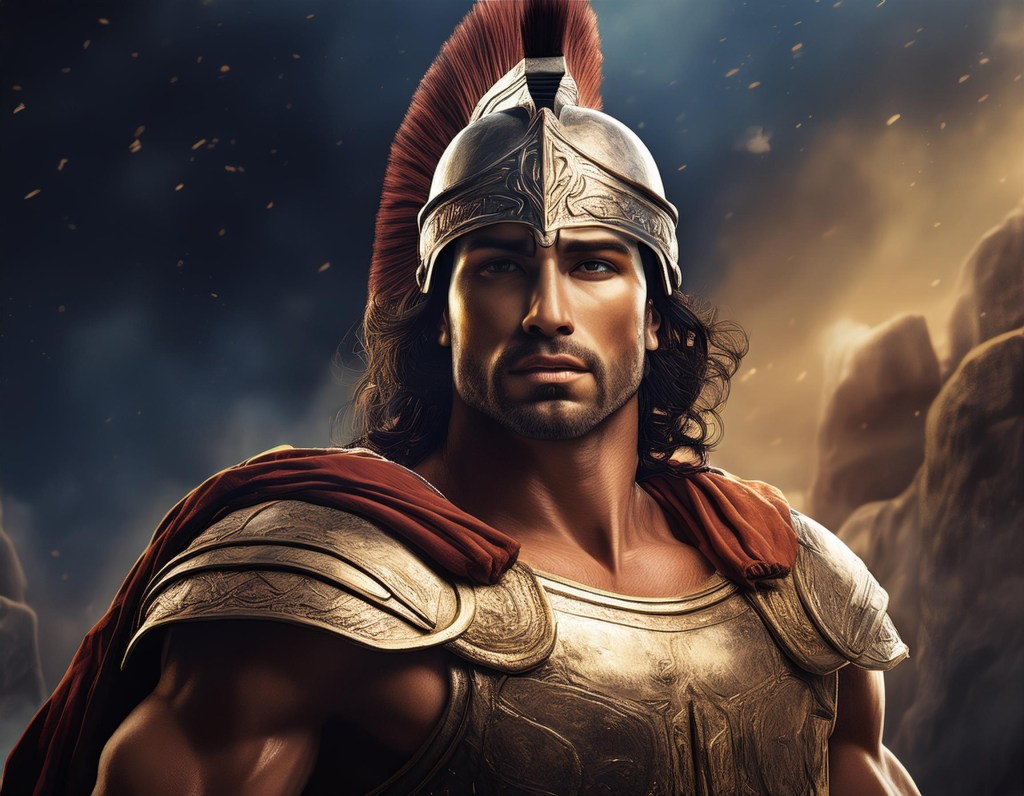
That son of hers is another Greek figure still known to modern audiences, Achilles. And yes, I did have to use a picture of Achilles. Usually, I don’t focus on women on my blog too often, but my hands are kinda tied here in talking about nymphs since according to the Greeks there aren’t male nymphs. But I still write gay romance, something Achilles himself was known to indulge in, so yeah, the rules of life require him to get a special mention and picture.

Powers and Abilities

Nymphs weren’t just pretty faces hanging out in nature. Okay, they kind of were, but they do have some nifty supernatural skills like:

  • Healing abilities (especially water nymphs)
  • Control over natural elements
  • The power to grant prophecies
  • Shape-shifting abilities
  • Extended lifespans
  • Some could even bestow curses when angered

The last one is more of a rarity. Nymphs were usually mild-mannered and playful, but they could be inspired to engage in a little divine fury on occasion, usually when someone threatened or harmed the natural land or landmark they protected.

Nymphs in the Pantheon of Greek Mythology: A Step Below the Olympians

While they are celebrated as divine entities, they operate on a different level compared to the Olympian gods and goddesses, such as Zeus, Hera, and Poseidon. Nymphs are typically regarded as lesser deities or spirits, existing in the realm between mortals and the Olympian gods.

While nymphs are revered and often worshiped in local cults, they lack the omnipotence associated with the Olympians. Since nymphs and their powers are limited to their natural settings, this gives them roles as guardians rather than rulers. They wield power more localized in scope. For instance, a naiad governs the stream she resides in, while a dryad protects a specific grove of trees.

Answering to Greater Powers

Nymphs often act as attendants or companions to the greater gods, reflecting their subordinate status in the mythological hierarchy. For example, many tales feature nymphs serving as attendants to Artemis, the goddess of the hunt and wild nature. They accompany her in the woods and are typically portrayed as loyal followers of this formidable goddess.

Ritual and Belief

Nymphs weren’t just characters in stories – they were deeply woven into ancient Greek culture. Ancient Greeks took their nymph worship seriously.

People would leave offerings at springs and groves believed to be home to nymphs. Sometimes they built shrines called nymphaea near springs and grottos, where they’d leave offerings like honey, oil, and milk. Some of these sacred spots became major cultural centers, showing just how important nymphs were to daily Greek life.

Why Nymphs Matter Today

In a world where we’re increasingly disconnected from nature, these ancient nature spirits remind us of humanity’s deep connection to the natural world. Their stories speak to eternal themes: love, transformation, and our relationship with the environment around us.

Whether you’re a mythology enthusiast, a fantasy reader, or just someone who appreciates a good story, nymphs offer something fascinating to explore. Their tales continue to inspire writers, artists, and storytellers today, proving that these ancient nature spirits still have plenty to teach us about our relationship with the natural world.


Sources:

  1. Larson, Jennifer. “Greek Nymphs: Myth, Cult, Lore” (Oxford University Press, 2001)
  2. Hard, Robin. “Handbook of Greek Mythology” (Routledge, 2004)
  3. Burkert, Walter. “Greek Religion” (Harvard University Press, 1985)
  4. Homer. “The Odyssey”
  5. Ovid. “Metamorphoses”
  6. Kerenyi, Karl. “The Gods of the Greeks” (Thames & Hudson, 1951)